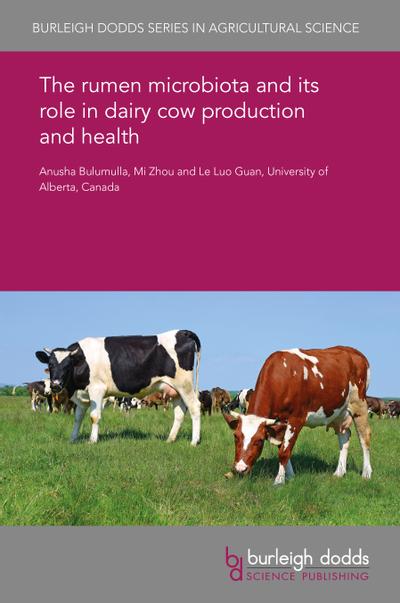
The rumen microbiota and its role in dairy cow production and health
Anusha Bulumulla, Dr Mi Zhou, Le Luo GuanInformation
-
Publisher
-
ISBN
-
ePub ISBN
- Burleigh Dodds Science Publishing
- 9781838791643
- 9781838791643
-
Published at
-
Pressing
- 2017
- 0
About this book
Ruminants have a complex microbial community inhabiting their gastrointestinal tract. In particular, rumen microbiota converts lignocellulose material to nutrients and energy, which dictate to the animal’s performance through a host–microbe symbiotic relationship. Owing to their significant role in ruminant agriculture, rumen microbes have been extensively studied since the 1950s, and progress in this research has accelerated by the application of molecular biological techniques since late 1990s. This chapter summarizes current knowledge about rumen microbial diversity, ecology, function and relationships with host phenotypes. Further, it covers current trends and innovations, including ‘omics’ approaches and applications to study rumen microbiota, which have enabled us to identify rumen microbiota in depth and uncover new insights into the structure and function of this complex microbial community. Finally, knowledge gaps and future directions for research into rumen microbiota and its importance in animal production and health are addressed.
Note: Some books are only available in specific countries.
Therefore, always check if your books are available in your country before subscribing by using the search function in the app at buku.app.